CVMA and Declawing Cats
24 June 2018
The California Veterinary Medical Association is in favor of declawing cats per the CVMA Policy on Declawing of Domestic Cats their website, July 2010.
The article does not cover the complete facts about declawing, only that veterinarians are trained professionals who will only prescribe the declawing procedure as a last resort to prevent abandonment or euthanasia. They also suggest that declawing is a safe alternative to unwanted scratching, especially for those who are unable to properly train their cats. The CVMA also states that "current surgical techniques and modern anesthetic and pain medications have greatly reduced the pain and discomfort associated with cat declawing." What they decline to say has harmful effects and is hidden with the rest of the facts about declawing:
Facts (and analyses):
- CVMA: Veterinarians are trained to distinguish medical and behavioral problems and need to be able to continue to educate and counsel clients.
- That is true, but too many veterinarians are more interested in making money to take into consideration the welfare of their patients: the animals. As a result, these vets refuse to educate their clients and don’t distinguish between behavior types.
- CVMA: Veterinarians do not take the issue of declawing lightly and strive to educate pet owners about available alternatives.
- This is not completely true. If a veterinarian is opposed to declawing, they would not perform the surgery merely at the request of the owner. Too many vets are refusing to educate their clients about the long-term/life-time effects of declawing.
- CVMA: Claw removal is sometimes medically necessary for conditions such as tumors or chronic infections.
- That should be the ONLY time a claw is removed, and ONLY on the affected toe, not all of them for the convenience of the owner’s furniture.
- CVMA: Studies have proven that behavioral problems are the leading cause of unnecessary relinquishment of animals.
- Veterinarians promote declawing cats with “uncontrollable” scratching problems claiming that a declawed cat will keep his home.
- That is not true. Too many declawed cats develop worse behavioral issues and are relinquished to shelters because of these worse behaviors.
- CVMA: Not all pet owners are able to successfully train a cat to refrain from using its claws in a destructive manner.
- Many cat owners don’t even own scratching posts for their cats. These cat owners prefer the idea of instant scratching prevention rather than having to teach the cat to use a scratching post.
- CVMA: Owners who are elderly or disabled may lack the ability or means to provide the needed training.
- Not always true! Being elderly or disabled does not mean incapable. Many elderly and disabled people have great success training their cats and kittens.
- If the person is too incapable of training a cat or kitten, they should consider another type of animal that doesn’t use its claws/nails to scratch.
- CVMA: Owners, or those living on or otherwise coming on to the premises, may be immunocompromised and thus more susceptible to diseases transmitted through feline clawing.
- False! The Center for Disease Control does not encourage declawing cats as a way to prevent disease in immunocompromised individuals. Ticks transmit more diseases than cats do. https://www.cdc.gov/healthypets/pets/cats.html
- In an article by the CDC, 1997 USPHS/IDSA Guidelines for the Prevention of Opportunistic Infections in Persons Infected with Human Immunodeficiency Virus, they say “declawing is not generally advised,” https://www.cdc.gov/mmwr/preview/mmwrhtml/rr5804a1.htm
- Another article by the CDC, Bartonella Infection (Cat Scratch Disease, Trench Fever, and Carrión’s Disease) says “Declawing is not recommended.”
https://www.cdc.gov/bartonella/cat-scratch/ - Again, either teach the cat not to scratch people or have a pet that doesn’t scratch.
- CVMA: Still others may be faced with pets that are particularly resistant to training.
- No animal is untrainable! All animals can learn and therefore be trained, some just take more time and patience than others. If training a cat is too difficult, get a different type of pet.
- CVMA: Euthanasia, abandonment, or other forms of relinquishment should not be the last resort for the cat owning public.
- To this I agree!!! BUT declawing should never be an option. Surgeons are not allowed to operate on anyone without the patient’s permission. This should apply to cosmetic declawing also. The only exception is for the health of the cat’s toe due to accidental injury or illness, such as cancer.
- CVMA: Current surgical techniques and modern anesthetic and pain medications have greatly reduced the pain and discomfort associated with cat declawing.
- NOT TRUE!!! To explain why declawing should never be an option, below is a list of facts about declawing:
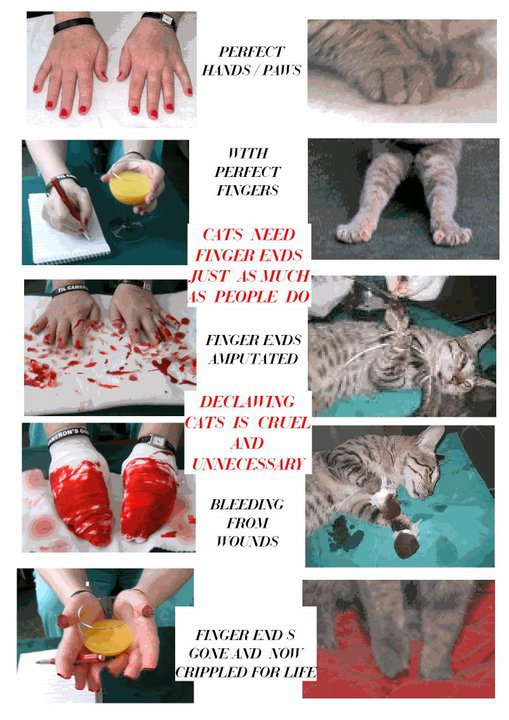
- Declawing is the amputation of the last knuckle of each toe. This includes more than just the nail: the skin, bone, knuckle, muscles, tendons, nerves, blood vessels, etc.
- For front declawing, that is a total of 10 separate amputations.
- If the cat is both front and rear declawed, that is 18 separate amputations.
- Amputations are extremely painful, regardless of which method is used. (Just ask a human amputee.)
- Remember stubbing your toe? Think how badly it would hurt if it had been cut off!
- Pain medication used is not always sufficient during the procedure.
- Many cats have cried out as their bones are cut.
- Rarely is pain medication prescribed after the surgery.
- Some vets don't believe animals feel pain.
- Imagine having major surgery without any pain medication after you wake up!
- After the surgery, the cat is not given time to heal like a human amputee.
- They don’t get bed rest while the stumps heal.
- They don’t get wheelchairs during recovery.
- They must put weight on the severed toe bones, without any cushioning, to walk to their food and water, and their litterbox.
- Then these feline amputees have to use these same amputated toe nubs to scrape litter over their waste.
- The pain associated with using newly amputated toe bones causes behavioral problems in the long run.
- The cats associate the pain with the litterbox because it hurts to scrape the litter, even if it is only paper.
Many kitten owners claim that the surgery does not affect their kittens because within a day or two, the kitten continues playing just like before. That is because the kitten is full of youthful energy and has to expend it just like children do. They know that something is wrong with their paws, but the need to play is strong. Plus, the kittens understand that nothing is going to reverse the removal of their claws. So, they continue on with their lives.
If you still disagree that your kitten will be “just fine” after declawing, talk with parents whose children lost limbs. Even though these children continue to play, life is never the same as it is for those people who have never experienced amputations.
Another thing to consider:
What would you do:
If your child took a screwdriver and used it to destroy the covering on your favorite chair? Or, if your child used a hammer to gouge a hole in the kitchen wall, how would you discipline that child? Would you have his fingers cut off to make sure he/she never did it again?
That would be considered extreme child abuse and no parent would never even consider such horrendous punishment. The worst thing any parent would consider may be a spanking, time out, or restriction of some sort.
So, if you claim your kitten is a member of your family, then why are you not teaching it how to behave like a family member?
IS IT ETHICAL TO DECLAW?
In the United States of America, unlike other countries, it is still quite legal to perform declawing surgeries as well as the debarking of dogs and cropping dog's tails and ears. As a matter of fact, many landlords require these procedures of their tenants.
Believing that cruel and inhumane procedures are not taught at medical schools is a great misconception. Veterinary schools, as well as all other medical schools, teach all surgical procedures, regardless of whether the students and/or teachers agree with the inhumanity of the procedures.
A practicing veterinarian knows all the pros and cons of declawing. The vet is also aware that declawing is the amputation of the last knuckle on each toe on each paw. These declaw veterinarians choose to ignore everything, especially the welfare of the cat, because of the amount of money that is to be made at the expense of someone who cannot speak for himself.
It is definitely the veterinarian’s responsibility to educate the owner thoroughly and graphically in hope that the owner will change his mind about declawing his cat and seek other methods for saving his furniture, like a scratching post, nail covers, etc. While in the vet’s clinic, the owner should be required to watch a very graphic, detailed video of an actual surgery, complete with original sounds, prior to making a final decision. Even under deep anesthesia, the cat will scream when each toe is amputated. The owner needs to hear this and know what is truly involved for the cat.
The Physical Consequences of Declawing Your Cat
April 5, 2014 by POPEYE
(Jean Hofve DVM) Declawing changes the way the cat’s paws function, and this creates stress on the joints of the paw, wrist, elbow, shoulder, and spine. The cat’s gait changes, as weight is shifted backward from the toes to the large rear pad of the paw.
Research has demonstrated that, after declawing, cats shift their entire weight more toward the hind legs. This is quite a feat, considering that the front legs normally bear about 60% of the cat’s entire weight.
Within 6 months or so, normal weight distribution among the four legs is restored to pre-surgery values. However, changes and stresses within the paw persist and may even worsen due to normal contracture of the severed tendons due to scar tissue formation.
Over time, this altered stress can contribute to the development of arthritis.
In most older declawed cats, the toes are completely “frozen,” immovable even under deep anesthesia.
Declawing causes observable changes to the cat’s anatomy that are not only visible on radiographs (x-rays) but are obvious to anyone who cares to see them.
Here is what it looks like:
VS.
It would be interesting to hear what the orthopedic specialists make of these changes. Can the veterinary community continue to deny the reality that declawing causes serious long-term consequences to the cat?
http://www.federaljack.com/the-physical-consequences-of-declawing-your-cat/comment-page-1/#comment-477354
----------
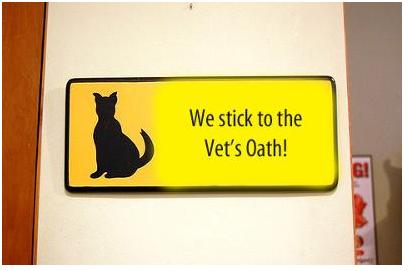
The American Veterinary Medical Association (AVMA) wrote the veterinarian's oath for ALL veterinarians.
The Veterinarian's Oath states:
"Being admitted to the profession of veterinary medicine, I solemnly swear to use my scientific knowledge and skills for the benefit of society through the protection of animal health and welfare, the prevention and relief of animal suffering, the conservation of animal resources, the promotion of public health, and the advancement of medical knowledge.
“I will practice my profession conscientiously, with dignity, and in keeping with the principles of veterinary medical ethics.
“I accept as a lifelong obligation the continual improvement of my professional knowledge and competence.”
Why are so many veterinarians breaking their oath to “the protection of animal health and welfare, the prevention and relief of animal suffering, the conservation of animal resources, the promotion of public health, and the advancement of medical knowledge.”? The oath clearly states that the vet should never harm any animal, but declawing is definitely harmful to cats.
You may ask, “How does declawing a cat affect public health?” Consider the diseases associated with urine and feces. Allowing a cat to keep his claws also allows him to use his litterbox without any pain. Pain associated with the litterbox causes elimination outside the box. If the cat’s family gets sick, the disease can spread to all who come in contact with the cat’s family.
'Many vets and clinic staff deliberately misinform and mislead clients into believing that declawing removes only the claws in the hopes that clients are left with the impression that the procedure is a "minor" surgery comparable to spay/neuter procedures and certainly doesn't involve amputation (partial or complete) of the terminal-toe bone, ligaments and tendons. Some vets rationalize the above description by saying that since the claw and the third phalanx (terminal toe bone) are so firmly connected, they simply use the expression "the claw" to make it simpler for clients to "understand". Other vets are somewhat more honest and state that if they used the word "amputation", most clients would not have the surgery performed!'
http://www.declawing.com/htmls/declawing.htm
**********
Declawing is painful. There is no such thing as a painless declaw… It is critically important to ensure proper pain management post-op.
http://vmdiva.com/2009/01/to-declaw-or-not-to-declaw-that-is-the-questionof-ethics/
Pain management in dogs and cats is an area where vast differences exist among veterinarians.
http://www.avma.org/onlnews/javma/dec01/s121501g.asp
According to anecdotal evidence, many dogs and cats still receive little to no analgesia following surgery or trauma. Dr. Hellyer cited several surveys.
http://www.avma.org/onlnews/javma/dec01/s121501g.asp
In a Wagner and Hellyer JAVMA survey of 2002, of 1000 vets in the USA, it was found that 44% did not administer pain relieving medication after surgery.
http://www.ragdollrescue.com/declaw.html
As at 2001 pain management at Colorado State University was not uniform. Canadian veterinarians surveyed indicated that: Analgesics were not administered to... 30 percent of cats undergoing surgery associated with tissue trauma and pain.
http://www.avma.org/onlnews/javma/dec01/s121501g.asp
In about 1990, veterinarians were discussing whether animals actually hurt!
http://www.avma.org/onlnews/javma/dec01/s121501c.asp
Bearing in mind the late awareness by veterinarians that cats can feel pain (extraordinary isn't it), it is my belief that veterinarians are still not fully aware of the kind of pain that they are causing when they declaw a cat. In fact they will probably never know for sure. There is a wide range of drugs used (when they are used) and some are less effective than others. Are some (a lot) ineffective? The type of pain that a declawed cat feels will probably include neurogenic pain. This is the pain felt from an amputated limb and I will suppose that that applies to a part of limb as is the case in declawing. Do vets fully understand this sort of pain? And if not aren't they negligent in performing a needless operation that probably causes it?
Animals are a valued part of society and are to be protected from needless suffering.
Dr Hellyer -- Silent suffering AVMA Animal Welfare Forum addresses pain management in animals 2001
No consensus exists for what constitutes ethical treatment of animals with regard to pain, even among veterinarians, who are known to place a premium on relieving animal suffering. Studies have shown that sensitivity to animal welfare issues among veterinary students varies according to gender and background. Views may also vary according to nationality and religious beliefs.
http://www.avma.org/onlnews/javma/dec01/s121501h.asp
The above statement clearly indicates that there are bound to be many instances of cats suffering acute post operative pain for up to 42 days.
Tobias KS. Feline onychectomy at a teaching institution: a retrospective study of 163 cases. Vet Surg 1994; 23: 274-280.
Sixty-one of 163 cats exhibited signs of pain for one to 42 days after declawing; however, the median duration of signs was two days.
http://www.avma.org/issues/animal_welfare/declawing_bgnd.asp
Veterinarians would seem to hold a wide range of views and skills in regard to pain management making consistency impossible and the chances of a cat suffering post operative pain after a declaw is likely. The problem is that vets don't know how much pain the cat is feeling. It is all guesswork. On this factor alone should vets be declawing cats, forgetting all the other extremely cogent and important arguments against declawing?
Myths and Misconceptions in Small Animal Anesthesia
The previous paragraphs are excerpts by Michael at Pictures-of-Cats.org. For more information about pain medication and declaw surgery, please follow this link:
http://www.pictures-of-cats.org/pain-management-for-declawed-cats.html
**********
Prevent unwanted animals in overcrowded shelters.
Their only crime is being born.
Their punishment is execution.
Please spay and neuter your pets.


