THE VETERINARIAN'S OATH
by Michael
(London, UK)
The following article is copied from Pictures-of-Cats.org. Thank you Michael for writing this!
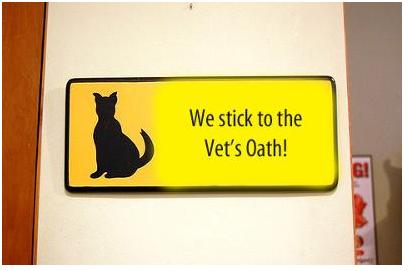
Modified (of course!) photo by John on Flickr (Flickr name: mtsofan)
The veterinarian's oath is central to everything the vet does. It guides him or her. It is a reference point in decision making. It is at the core of their work. Why, then, do nearly all the veterinarians in the USA disregard it, break it, tear it up day in and day out, millions of times over many years?
Does it have the value it was designed to have? Do vets cynically disregard it because no one enforces it? Do vets actually believe that they follow the oath but have simply lost their moral compass to such an extent that they deceive themselves in respect of this most important promise?
I am talking about declawing cats. Nearly all declawing operations are for non-therapeutic reasons and are therefore for the benefit of the person not the cat. The operation is detrimental to the cat - clear breach of oath. A vet cannot partially comply with his or her oath. It is an all or nothing promise.
The American Veterinary Medical Association (AVMA) says that the veterinarian oath has "tremendous meaning" and that "It's a promise that each veterinarian makes at graduation...” Why do they routinely break that sacred promise?
As the veterinarian oath is so blatantly disregarded why did the AVMA consider changing it? Why bother?
Yet, it has been changed, albeit subtly from the 2nd December 2010. Here is the new veterinarian oath with the new wording highlighted:
Being admitted to the profession of veterinary medicine, I solemnly swear to use my scientific knowledge and skills for the benefit of society through the protection of animal health and welfare, the prevention and relief of animal suffering, the conservation of animal resources, the promotion of public health, and the advancement of medical knowledge.
I will practice my profession conscientiously, with dignity, and in keeping with the principles of veterinary medical ethics.
I accept as a lifelong obligation the continual improvement of my professional knowledge and competence
The new words add "welfare" and "prevention" to the oath.
The AVMA says that vets work includes the "prevention of suffering and promotion of good welfare". There is no doubt that the new oath is better but does it matter?
More importantly to me, will it help stop vets declawing cats? Is this a rather feeble attempt of the AVMA to try and get the attention of the vets to think about what they are doing in declawing cats - flagrantly breaching the oath?
I have no idea, frankly. I know one thing, though. The oath is almost meaningless, currently, as it is breached collectively.
On the face of it, there is no benefit in rewriting a piece of text that has no relevance in the lives of those it is meant to guide....What do you think?
Oh, I almost forgot. The AVMA says this about declawing:
Declawing of domestic cats should be considered only after attempts have been made to prevent the cat from using its claws destructively or when their clawing presents a zoonotic risk for its owner(s)....
How many American vets do that?
Want Your Cat to Hate You? Do This.
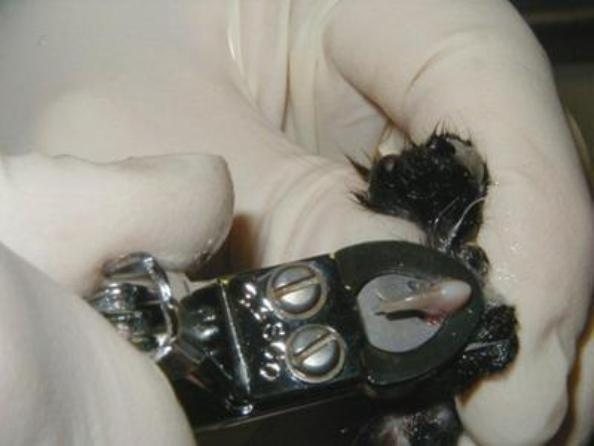
Dr. Narda Robinson, a university professor and veterinary educator, has come to the aid of animals in danger of mutilation from a surgery called "declawing."
In a new article published in Veterinary Practice News, she explains that even though the procedure involves 10 separate painful amputations at the last joint of a cat's toes, the willingness of many veterinarians to perform the cruel (but billable) operation makes cat guardians think, "Oh, it must be acceptable then," when it is not.
Dr. Robinson asks the following:
"How does protecting furniture or one's bottom line compare with the veterinarian's oath to employ knowledge and skill "for the benefit of society through the protection of animal health and welfare, the prevention and relief of animal suffering?"
Cats' claws and the bones and cartilage that hold them in place allow cats to balance properly, climb, and defend themselves. Declawing—which removes these claws, bones, and cartilage—is a terribly painful and permanently crippling procedure that can cause lasting nerve and other physical damage. Declawed cats have been known to resort to biting, and many have other permanent behavioral issues, including litterbox aversion—not to mention that if they somehow get outdoors, they don't stand a chance against predators.
There are effective and humane ways to prevent cats from inflicting damage with their claws, such as regular claw trimming and setting out numerous scratching posts and cardboard scratch pads.
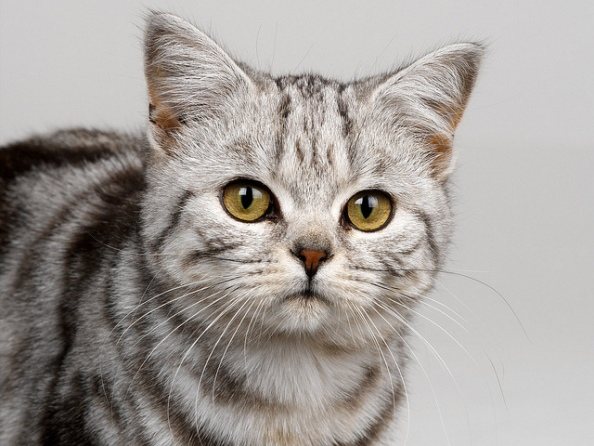
Cats claw to have fun and exercise, to maintain the condition of their nails, and to mark their territory.
kitty.green66|cc by 2.0
What You Can Do
If anyone you know is considering having a kitten or cat declawed, please make sure that the person has all the facts.
http://www.peta.org/b/thepetafiles/archive/2012/07/19/declawing-cats-violates-oath-says-vet.aspx

Prevent unwanted animals in overcrowded shelters.
Their only crime is being born.
Their punishment is execution.
Please spay and neuter your pets.