Picture Gallery
The complication pictures vets don't want us to see:
'Many vets and clinic staff deliberately misinform and mislead clients into believing that declawing removes only the claws in the hopes that clients are left with the impression that the procedure is a "minor" surgery comparable to spay/neuter procedures and certainly doesn't involve amputation (partial or complete) of the terminal-toe bone, ligaments and tendons. Some vets rationalize the above description by saying that since the claw and the third phalanx (terminal toe bone) are so firmly connected, they simply use the expression "the claw" to make it simpler for clients to "understand". Other vets are somewhat more honest and state that if they used the word "amputation", most clients would not have the surgery performed!'
http://www.declawing.com/htmls/declawing.htm
By: Declawing CrippledmyPaws

For every bone amputation and piece of skin that is cut during declaw surgery, there is a wound site & opportunity for bleeding and hemorrhage. The following x-rays and paragraphs are medical proof of the damage caused by declawing! The pictures not only show the short-term side effects, but also the long-term damage of being declawed. "A very few vets kow how to relieve the pain with surgery. Saying that declawing will keep the cat in a good home is an oxymoron and emotional black mail. Do not declaw your cat!"
http://www.pictures-of-cats.org/dr-ron-gaskin-is-a-good-vet-who-performs-declaw-repair-surgeries.htm
Please follow these llinks for more information:
"Stoicism may be cats’ greatest enemy in the declaw debate. Nobody declaws dogs—in vet school we were told that it’s too painful. Dogs whine, scream, and howl; their pain is easy to recognize. But cats are quiet, and they characteristically endure pain without complaint. It is axiomatic in science that “lack of evidence does not equal evidence of lack.” With cats, a lack of obvious signs of pain does not mean the cat isn’t feeling pain; it may even be feeling a great deal of pain.
1. “Cats, due to their stoic nature, are notorious for not expressing pain and suffering.” (Benson GJ, Wheaton LF, Thurmon JC, et al. Postoperative catecholamine response to onychectomy in isoflurane-anesthetized cats: effect of analgesics. Vet Surg. 1991; 20(3):222-225.)
2. “…orthopedic procedures involving the fingers and toes of humans are associated with severe postoperative pain…” (Ibid.)
3. “Detection of pain in cats is a particular challenge, because signs of pain in cats are often subtle.” Cambridge AJ, Tobias KM, Newberry RC et al. Subjective and objective measurements of postoperative pain in cats. J Am Vet Med Assoc 2000; 217:685-690.
4. “Onychectomy is a painful procedure in cats… Unfortunately, cats typically receive analgesic medications for postoperative pain less often than do dogs.” (Romans CW, Gordon WJ, Robinson DA, et al. Effect of postoperative analgesic protocol on limb function following onychectomy in cats J Am Vet Med Assoc. 2005 Jul 1; 227(1):89-93.
5. Declawing is considered to be one of the most painful procedures an animal can undergo; regardless of method used, it is much more painful than spaying or neutering. Position statement on declawing. (American Association of Feline Practitioners. 2007 Nov.
http://www.catvets.com/professionals/guidelines/position/index.aspx?ID=291,
accessed 12/25/09).”
Declawing and Science, Jean Hofve, DVM
http://www.littlebigcat.com/health/declawing-and-science/
COMPARISONS
Onychectomy: “Declawing” – Feline Digital Amputation
1. Line of Amputation
3. Third Phalanx
4. Ungual Process
5. Ungual Crest
6. Flexor Tendon
7. Dorsal Ligaments
All are severed and amputated in the declawing surgery.
Declawing involves 10 separate and painful amputations.
Adapted from: Textbook of Small Animal Surgery 2nd edition; Slatter D; W.B. Saunders Co.
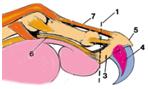
A normal paw with relaxed and extended fingers compared to a declawed paw with deformed fingers.
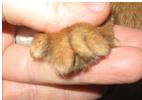
Onychectomy in human terms:
Human Declawing Comparison Poster by Ruth in the UK!
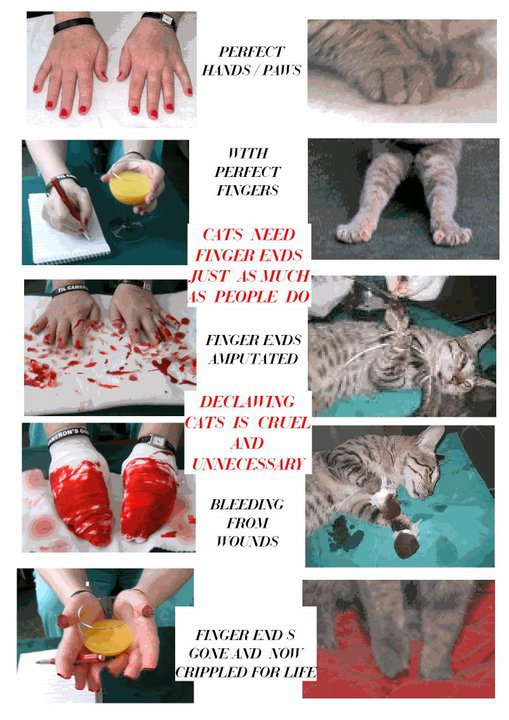
AFTER SURGERY: Bleeding, Burns, Confusion
Vets only give enough pain medication to last for the length of the surgery. Once the cat wakens from the painful declaw surgery, he is not given any more pain medication. The cat has to cope with the excruciating pain of having his fingers amputated alone and in his own way.
Post operative declawed cats
http://www.pictures-of-cats.org/recently-declawed-cat-pictures.html
‘… if they used the word "amputation", most clients would not have the surgery performed!'
http://www.declawing.com/htmls/declawing.htm
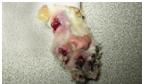
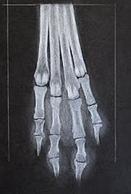
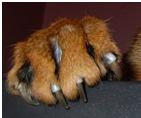

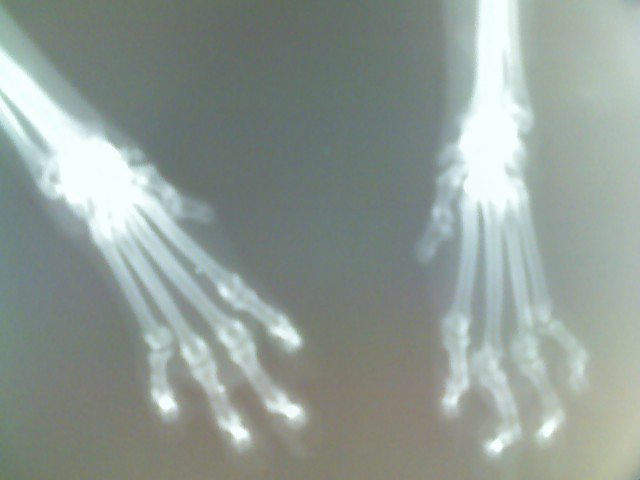
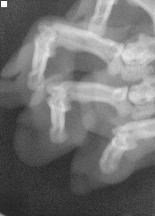
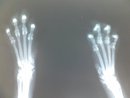
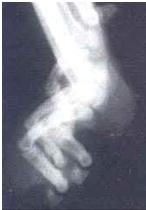
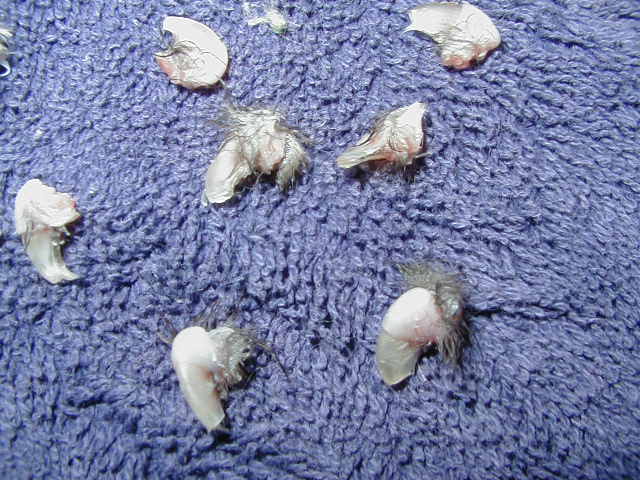
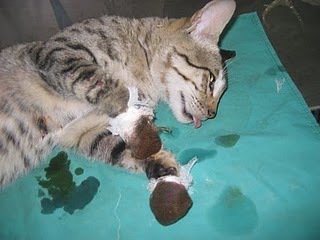

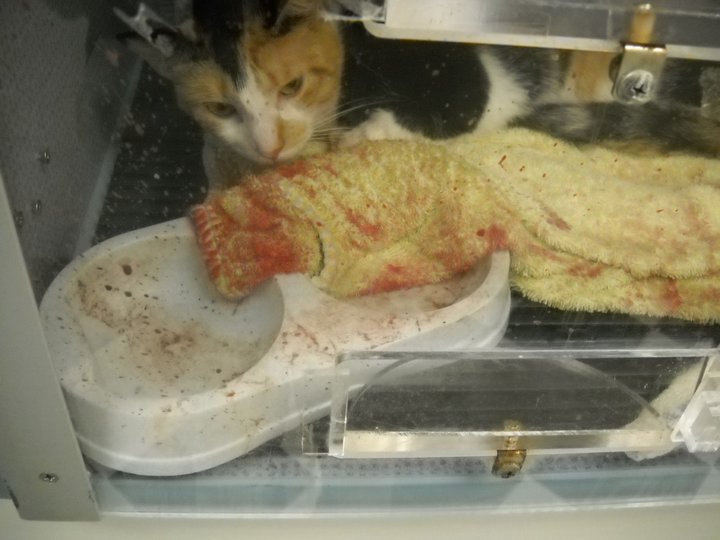
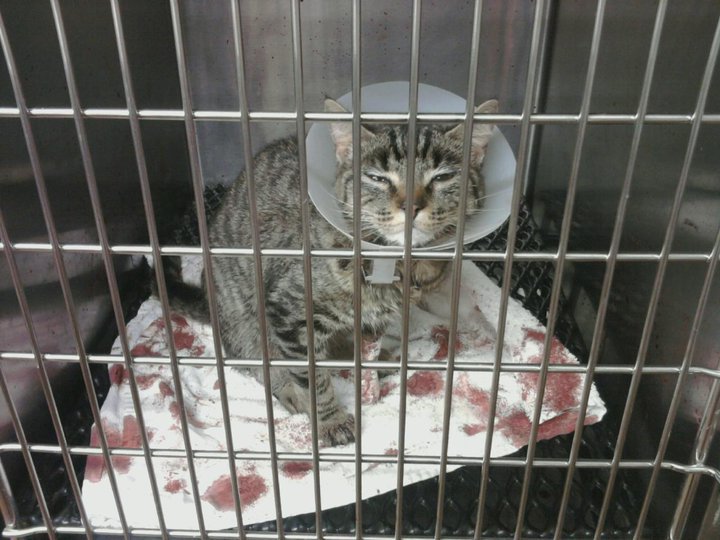
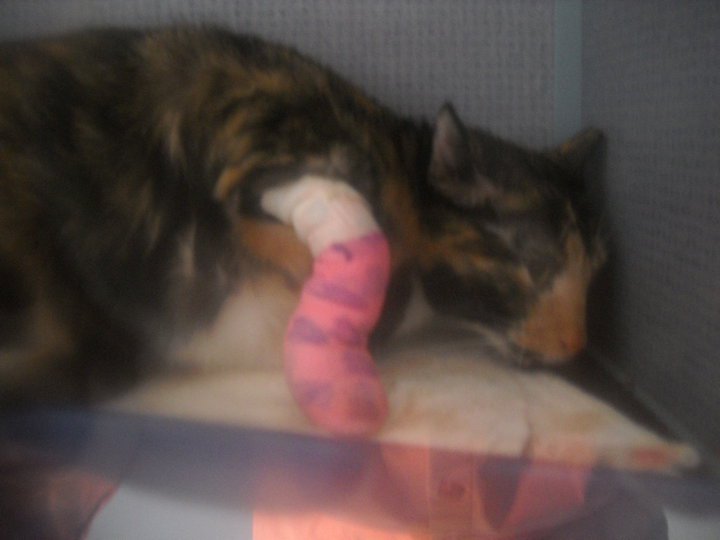
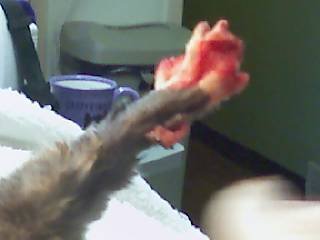
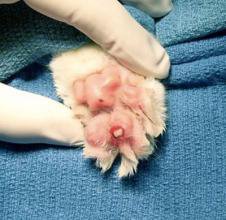
COMPLICATIONS: Biting, Bone Protrusions, Burns, Dead Tissue, Ulcers, Death
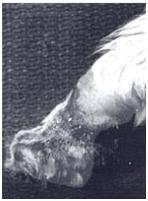
Necrotic skin resulting from animal attack
http://www.handicappedpets.com/Articles/declaw/index.html
Necrosis and sloughing of soft tissue following onychectomy, College of Veterinary Medicine, Ohio State University
http://maxshouse.com/facts_about_declawing.htm
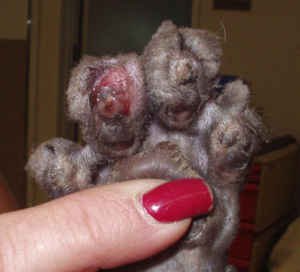
Necrotic skin on her lower legs and feet as well as paw pads
http://www.littlebigcat.com/health/declawing-a-rational-look/
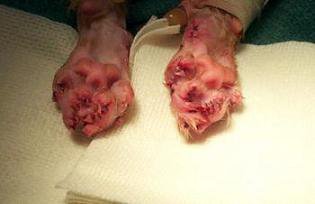
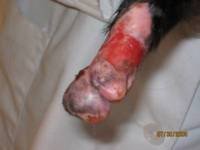
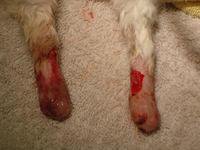
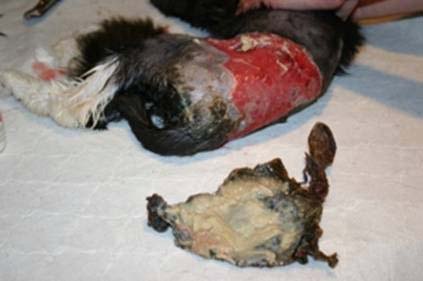
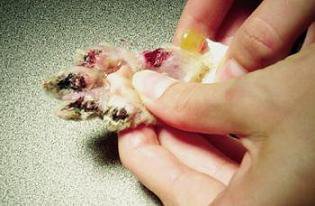
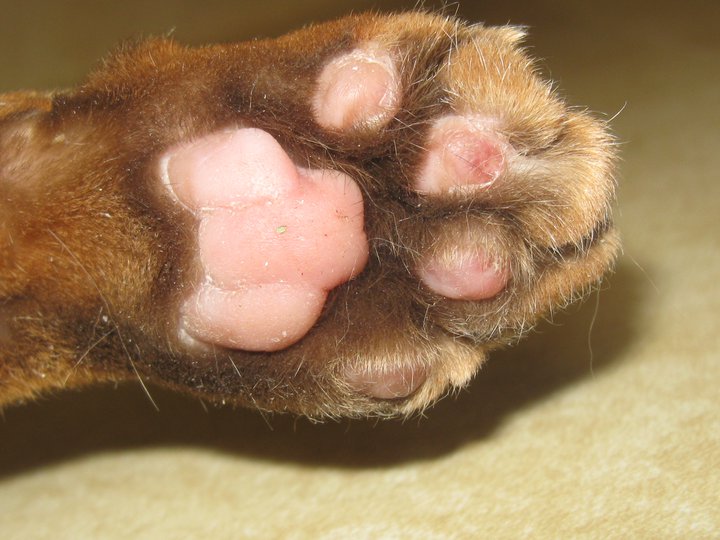
LIFE-LONG DEFORMITIES: Missing Feet, Arthritis, Crippling Mutilations, Claw Regrowth, Helplessness, Constant Pain, Death
DECLAWING COST THIS 6-MONTH-OLD KITTEN HIS ENTIRE LEG!!
He was turned in to the Greenville County animal shelter by its owners because they couldn’t afford the surgery to amputate the kittens leg- the kitten was declawed a couple of weeks ago and one of its feet got infected… treatment was not possible- the tissue in the leg was dead- so the whole leg was amputated.
http://www.facebook.com/
fbid=327966360614966&
.74873.194011810677089&type=1&theater
Stella lost her rear feet due to complications resulting from declaw surgery
http://www.stellahasnofeet.com/whois.html
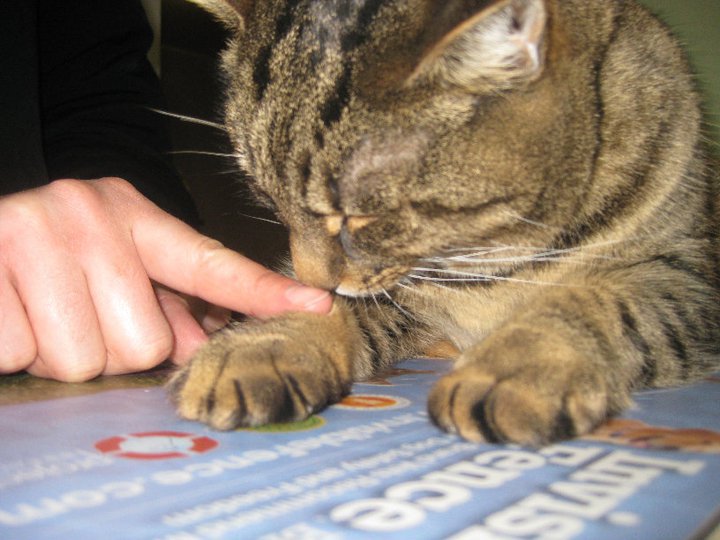
4 distinct signs of pain:
(1) half-closed eyes,
(2) pulled-back whiskers,
(3) holding the right front foot up, and
(4) placing the left front foot over the edge of the counter so there’s as little weight on his painful toes as possible."
http://www.littlebigcat.com/health/declawing-a-rational-look/
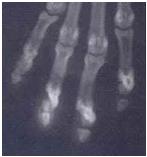
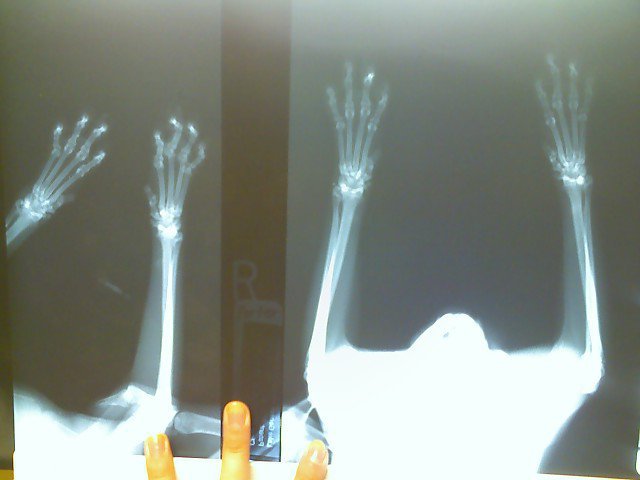
“… extreme acute angle between phalange 2 and phalange 1… foamy look on the end of phalange 2 on digits 2 & 3 (major weight bearing digits). This foamy look is chronic damage to the cartilage & bone end from walking on the amputated toe tips… notice that the position of the knuckles of her front feet puts her amputated toes on the hard surface first”
http://www.pictures-of-cats.org/dr-ron-gaskin-is-a-good-vet-who-performs-declaw-repair-surgeries.html
“Declawing… leads to the cat walking on its digit 2 & 3 bone ends… are very painful. Digital dental x-rays of the front digits show the pathology and painful changes in black and white… Many declawed cats in pain go misdiagnosed as "behavioral problems".’
http://www.pictures-of-cats.org/dr-ron-gaskin-is-a-good-vet-who-performs-declaw-repair-surgeries.html
De-clawed cats tend to walk abnormally back on their heels rather than on their entire pads because of the chronic pain at the end of their severed fingers and toes
http://www.twobitdog.com/DrFox/specialreport_Article.aspx?ID=46b4b2c4-93d6-4582-b4ec-7d311782aab8
College of Veterinary Medicine, Ohio State University
http://maxshouse.com/facts_about_declawing.htm
Declawed cats are in chronic pain… on pain meds, joint support, and calming remedies
http://www.facebook.com/photo.php?fbid=169635886410516&set=a.169635729743865.35039.100000923166351
Declawed cats are not able to defend themselves or escape from predators.
http://www.handicappedpets.com/Articles/declaw/index.html
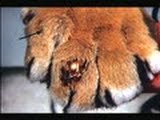
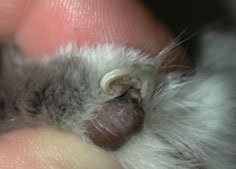
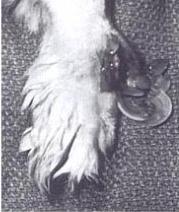
Inadequate amputation of the third phalanx in a cat with regrowth of claws following onychectomy. When there is evidence of regrowth at one site, it is common to find an excessive amount of the third phalanx remaining at additional sites.
http://www.facebook.com/l.php?u=http%3A%2F%2Fmaxshouse.com%2Ffacts_about_declawing.htm&h=34de0
Abnormal nail regrowth
http://www.pawproject.com/html/cases.asp?SortOrder=7
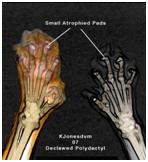
Dr. Jones does not declaw cats, but repairs and rehabilitates declawed cats


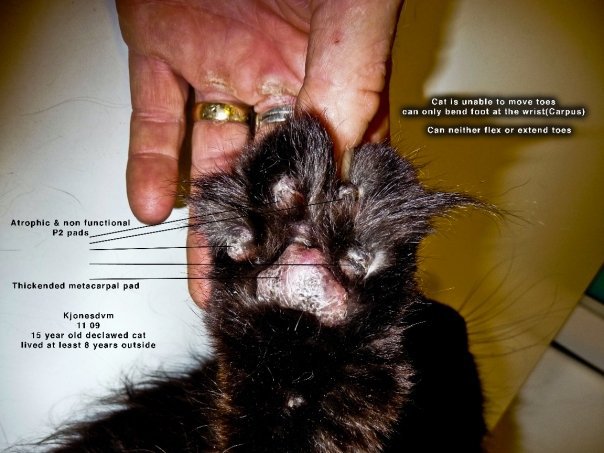
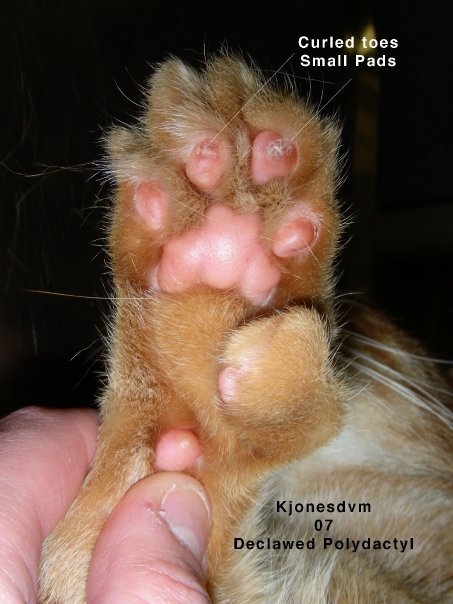
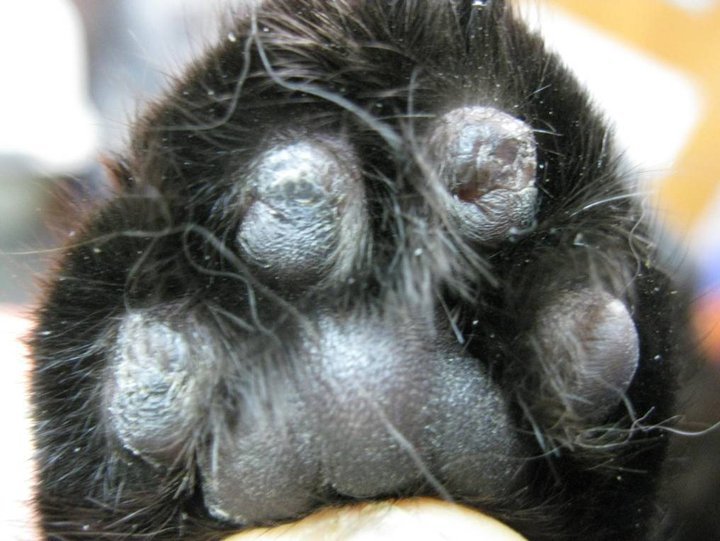
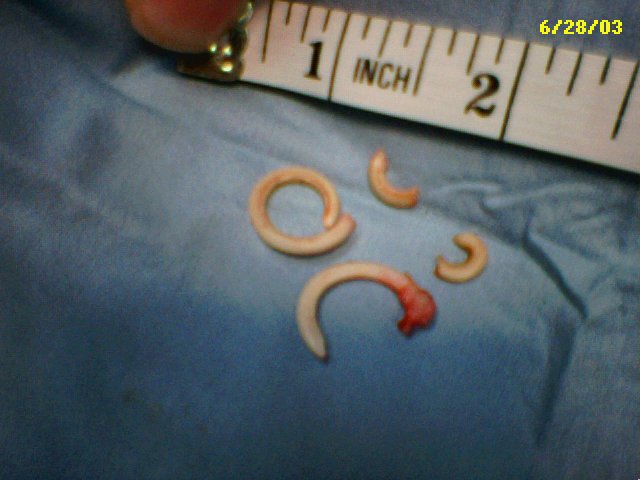
Urinating Outside The Box
This declawed cat urinates on the kitchen counter and harwood floors instead of the litterbox because of the painful arthritis in his declawed paws. Furniture is not safe from a declawed cat. Urine covered floors - declawed cats have more litterbox problems than clawed cats
http://www.littlebigcat.com/health/declawing-a-rational-look/
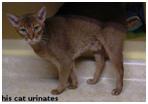
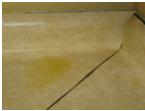
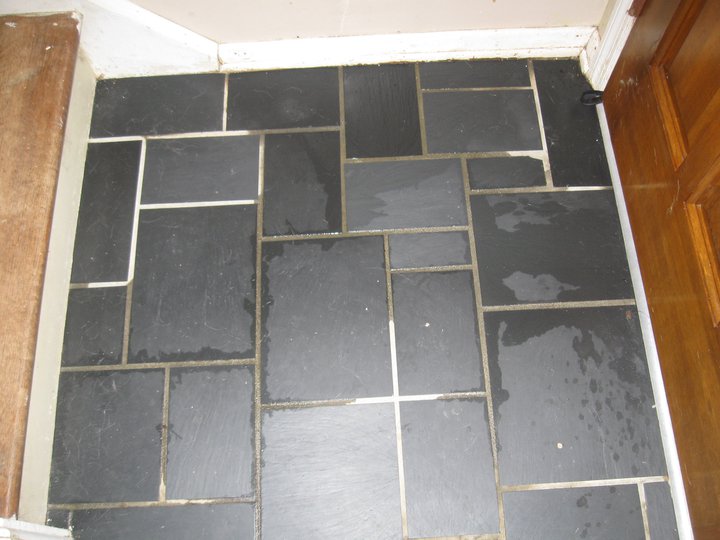
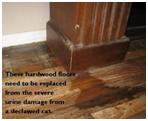
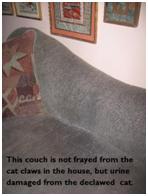
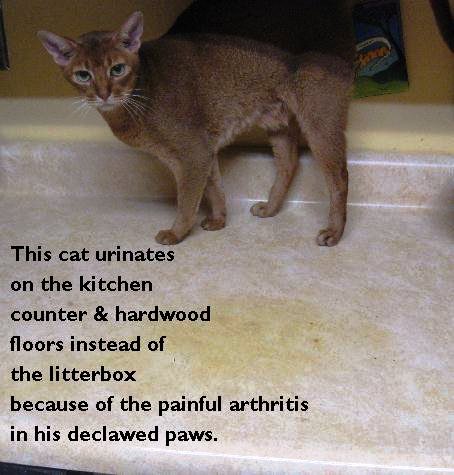
Repair Surgery (Tendonectomy)
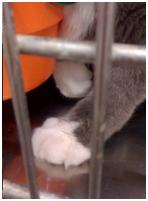
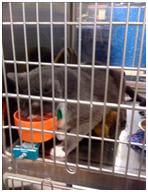
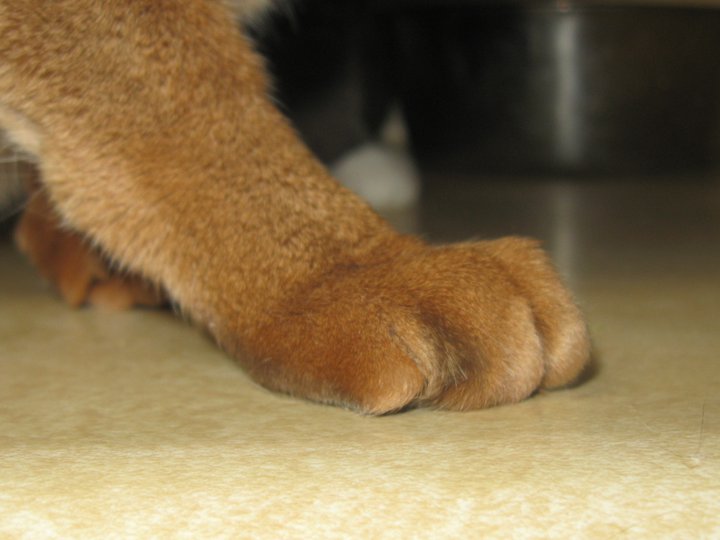
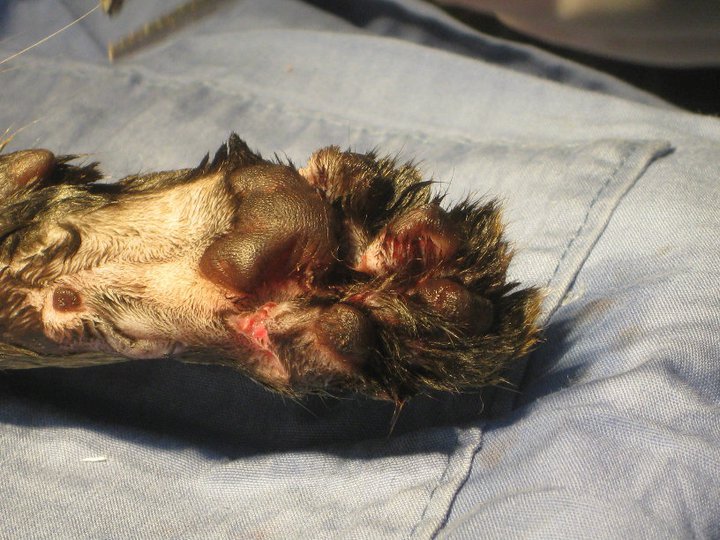
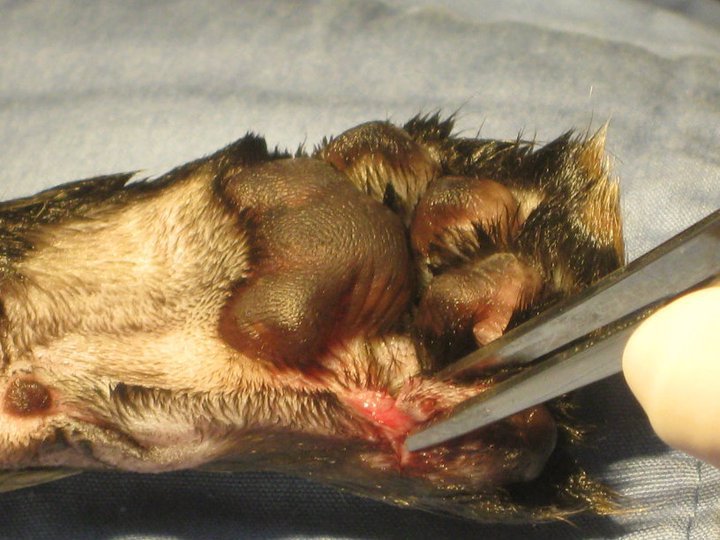
This cat was declawed as a kitten and then 8 yrs later disposed of when his owner was moving - she took her other cats & dog but dumped this cat at a vet’s office. Why? Because he had several issues - all related to his declawed paws - which included crying incessantly, chronic UTI's (which can be stress related), flicked and shook his paws in the air, and he didn't use the litterbox.
This cat was immediately put on Prozac and joint support treatment by the vet and a few weeks later had a tendonectomy performed to release his flexor tendons that had become stiff - the flexor tendons retract and stiffen after they are sliced or burned off during declaw surgery and cause the joints that they once helped to move to "freeze", which is very painful.
"In declawed (and tendonectomized) cats, the tendons that control the toe joints retract after surgery, and these joints become essentially “frozen.” The toes remain fully contracted for the life of the cat. In cats that were declawed many years ago, the toe joints are often so arthritic that they cannot be moved, even under deep anesthesia. The fact that most cats continue to make scratching motions after they are declawed is often said to “prove” that they do not “miss” their claws. However, this behavior is equally well–and more realistically–explained as desperate but ineffective efforts to stretch those stiff toes, legs, shoulders, and backs.” Dr. Jean Hofve
http://www.littlebigcat.com/health/declawing-a-rational-look/
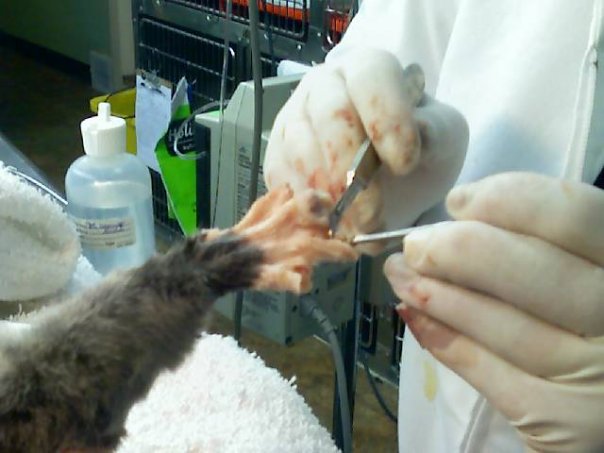
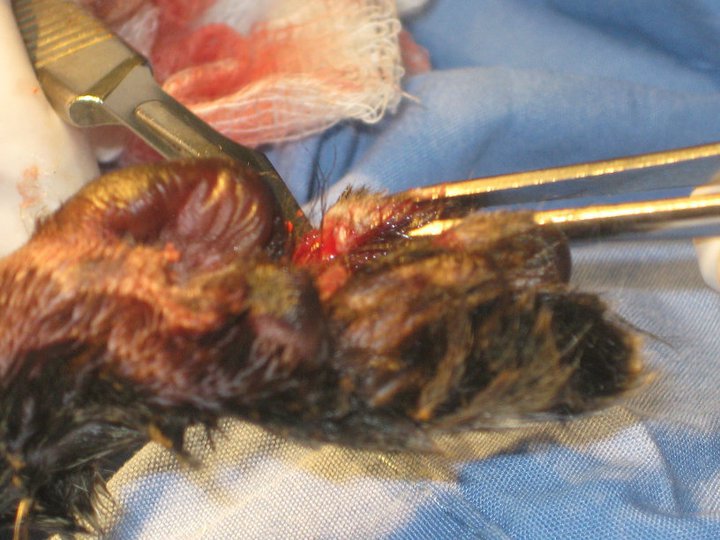
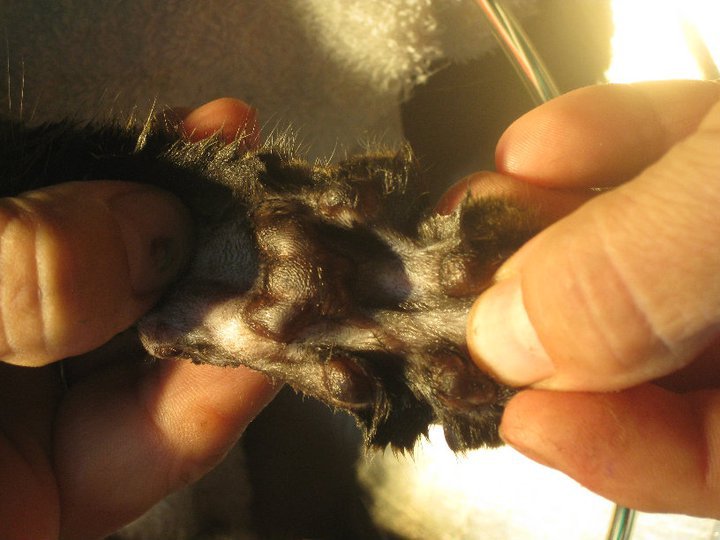
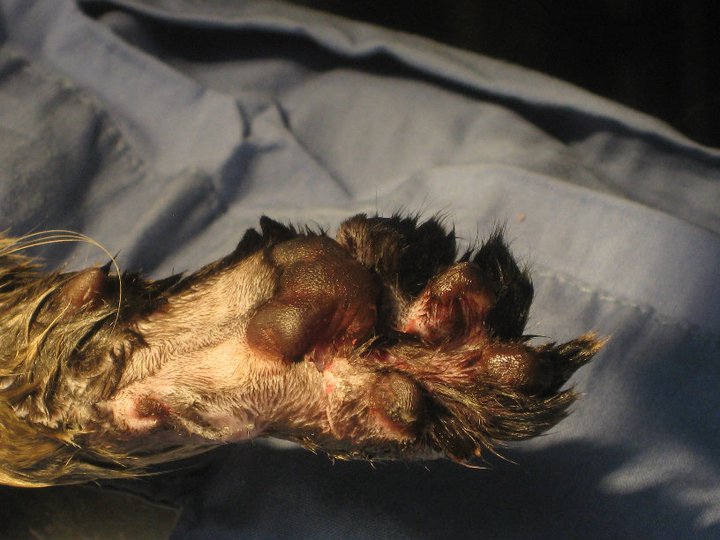
Read About These Nightmare Declawings:
DECLAWING COST THIS 6-MONTH-OLD KITTEN HIS LEG!! He was turned in to the Greenville County animal shelter by its owners because they couldn’t afford the surgery to amputate the kittens leg- the kitten was declawed a couple of weeks ago and one of its feet got infected… treatment was not possible- the tissue in the leg was dead- so the whole leg was amputated.
http://www.facebook.com/photo.php?fbid=327966360614966&set=a.323758537702415.74873.194011810677089&type=1&theater
"His routine de-clawing turned into a nightmare…” "The cat was squirting blood," "it was a bad situation. The infection had spread into his blood and into his soft tissue."
http://www.10tv.com/?sec=news&story=sites%2F10tv%2Fcontent%2Fpool%2F200801%2F1696740312.html
**********
"Monkey was released with bleeding front paws. There were large areas of tissue missing and the pads were either cut or missing."
http://www.cleveland.com/living/plaindealer/index.ssf?%2Fbase%2Fliving-0%2F1200216641105730.xml&coll=2
**********
"A friend had her indoor cat declawed even though she was reluctant to do so. It was a terrible experience for both the cat and the family. The poor cat bled profusely, made bloody footprints on the floor, slinging blood onto the wall. Now her paws are infected and the vet is keeping her.
http://blogs.chron.com/animalqa/2009/07/are_postdeclawing_infections_c.html
**********
DECLAWED PAWS are deformed paws, disfigured paws, dismembered paws, destroyed paws that are prone to a lifetime of pain & discomfort.
"Virtually all human amputees report “phantom” sensations from the amputated part, ranging from merely strange to extremely painful (about 40% of such sensations are categorized as painful). Because declawing involves at least ten separate amputations, it is virtually certain that all declawed cats experience phantom pain in one or more toes. In humans, these sensations continue for life, even when the amputation took place in early childhood. There is no physiological reason that this would not be true for cats; their nervous systems are identical to ours. Cats are stoic creatures, and typically conceal pain or illness until it becomes overwhelming. With chronic pain, they simply learn to cope with it. Their behavior may appear “normal,” but a lack of overt signs of pain does not mean that they are pain-free". Dr Jean Hofve, DVM
http://www.littlebigcat.com/health/declawing-a-rational-look/
**********
The following abstracts are from studies on declawing and tenectomy. Note the high complication rates for both procedures.
Vet Surg 1994 Jul-Aug;23(4):274-80
Feline Onychectomy at a Teaching Institution
**********
Borchelt and Voith, looking only at aggressive behavior in a retrospective survey of pet owners, found declawed cats bit family members more often than did non-declawed cats.
In a retrospective phone survey, Patronek found that among 218 cats relinquished to a shelter, 52.4% of declawed cats versus 29.1% of non-clawed cats were reported to have inappropriate elimination..."
Dr. Jennifer Conrad, DVM, The Paw Project,
http://www.pawproject.com/html/faqs.asp
**********
In a study published in the January, 2001 JAVMA, 33% of 39 (1 in 3) cats that underwent onychectomy developed "at least" one behavior problem immediately after surgery, with the most common problems being litter box problems and biting.
..."declawed cats are more likely to be relinquished than normal cats...Unwanted behavior is a major factor in reliquishment of cats to shelters. House-soiling, aggression, and biting are the top 3 reasons why cats are surrendered; as noted, these are the very same problems that 1 in 3 declawed cats will develop after surgery." Dr. Jean Hofve, DVM
http://www.littlebigcat.com/health/declawing-and-science/
**********
Published 2/1/03 on CourierPostOnline.com, "Eighty percent of the that are surrendered that are declawed are euthanized because they have a behavioral problem…. Declawed cats frequently become biters and also stop using litter boxes… One or the other…,” said William Lombardi shelter director, Gloucester County, New Jersey.
**********
Gloucester County Animal Shelter, says Lombardi, who’s been the director for three years and an animal control officer for 25, Cats with claws, he says, are always surrendered for human-related issues, mainly “moving and can’t take the cat with us.” Declawed cats, on the other hand, have behavior problems, and most who come in end up having to be euthanized. Even when Lombardi works with declawed cats and tries to place them in new homes, they often come back to the shelter for not using the litter box”.…”Almost all of our hotline calls are declawed cats with litter box issues,” says Pat Rock of the Oshkosh Area Humane Society in Wisconsin.” "The Declaw Dilemma", Nancy Lawson
http://www.animalsheltering.org/resource_library/magazine_articles/may_jun_2004/declaw_dilemma.pdf
**********
Seventy percent (70%) of cats turned in to pounds and shelters for behavioral problems are declawed. (National Survey from pounds & shelters obtained by Caddo Parrish Forgotten Felines & Friends)
http://www.sniksnak.com/cathealth/declaw.html
**********
From the Summer 2002 issue of PETA’s Animal Times: “A survey by a Delaware animal shelter showed that more than 75% of the cats turned in for avoiding their litter boxes had been declawed.”
**********
In my own three-year experience, 95% of calls about declawed cats related to litter box problems, while only 46% of clawed cats had such problems—and most of those were older cats with physical ailments. Of my calls, only declawed cats have cost their owners security deposits, leather sofas and floorboards. And it’s mostly declawed cats that have been prescribed pain killers, anti-depressants, tranquilizers and steroids. Two-thirds of my calls are about litter box problems. In 90% of those cases, the cat is declawed, sick or old. In 7 years, only 3 people have called about a “scratching-the-sofa problem” - yet countless of “healthy” declawed cats have peed on sofas." Annie Bruce, cat consultant & author Cat Be Good
www.goodcatswearblack.com
**********
Another county facility automatically puts down or transfers out any declawed cat, because of the greater likelihood that such cats will exhibit behavior problems such as litterbox avoidance or a propensity for biting.
http://www.bestfriends.org/archives/forums/080105adoptions.pdf
**********
Declawing does not keep a cat in its home. A declawed cat may lose its home, because of behavior problems that may develop after declawing...Considering all factors in aggregate, statistically, a declawed cat is more likely to be killed in the pound, because it was declawed." Dr. Jennifer Conrad, DVM, The Paw Project
http://www.pawproject.com/psa/facts_tips.asp
**********
Behavioral problems frequently haunt declawed cats. By far, the commonest thing we see is cats not using the litterbox. When cats have stress beyond what they can take, it often shows up as a litterbox problem and declawing makes them stress intolerant, in general, for the rest of their lives,” Dr. Harrison, DVM. Dr. Harrison gets 3-12 calls a day about litter box problems in cats and, after ruling out medical problems, 90 percent of the cats with litter box aversion are declawed cats. “Declawing: Behavior Modification or Destructive Surgery”, Animal Issues, 1998
**********
“…our cat care coordinator, was becoming increasingly disturbed at the euthanasia rate for declawed cats and decided to conduct an informal study. She discovered that more than 80% of declawed cats that were either returned or owner surrendered that year were done so because of litterbox problems or biting.”
http://declaw.lisaviolet.com/declawshelter.html
**********
“In some cases, when declawed cats use the litterbox after surgery, their feet are so tender they associate their new pain with the box...permanently, resulting in a life-long adversion to using the litter box. Other declawed cats that can no longer mark with their claws, they mark with urine instead resulting in inappropriate elimination problems, which in many cases, results in relinquishment of the cats to shelters and ultimately euthanasia. Many of the cats surrendered to shelters are surrendered because of behavioral problems which developed after the cats were declawed. Risk factors for relinquishment of cats to an animal shelter: "Among 218 cats relinquished to a shelter, more (52.4%) declawed cats than non-declawed cats (29.1%) were reported by owners to have inappropriate elimination problems." Source: World Small Animal Veterinary Association – 2001
http://maxshouse.com/facts_about_declawing.htm
**********
"...Colorado Humane Society and SPCA Inc. in Englewood and sees many cats come into the shelter because of litter-box issues. Frequently, the cat has been declawed, making the act of using the box painful.
http://www.bizjournals.com/denver/stories/2002/04/15/smallb1.html
**********
"My own queries to shelter personnel show that 20% of all cats entering shelters have already been declawed, and half of these declawed cats do not reach the adoption shelter, as they are screened out at intake as "behavior problems". Harriet Baker, "The Shocking Truth About Declawing Cats", 2003
**********
2/2007 "...Delaware Humane Association...Declawing also can lead to litter box problems...75 percent of declawed cats in shelters are there because they had issues using their litter boxes.
http://www.delawareonline.com/apps/pbcs.dll/article?AID=%2F20070202%2FPETS%2F702020307%2F-1%2FNEWS01
**********
In a study published in the January, 2001 JAVMA, 33% of 39 cats that underwent onychectomy developed "at least" one behavior problem immediately after surgery, with the most common problems being litter box problems and biting.
*Cocheco Valley Humane Society of Dover, NH annual shelter statistics revealed that there was a high percentage (66-72%) of cats turned in with behavioral problems who were declawed cats. Behavioral problems included improper elimination and aggressiveness. Shelter Sense, 8/1992, "A Cat and His Claws Are Too Often Parted: The Realities of Delawing" by Rhonda Lucas Donalds
**********
“Dr. Susan Swanson, DVM, owner of the Cat Care Clinic in Mahtomedi, Minnesota, notes that "year after year, the declawed cats that I see in my practice have higher rates of litter box issues such as inappropriate elimination"…Nearly every shelter and rescue group director in the country makes the same observation. Sore paws that don't feel like digging in the litter may be one reason why declawed cats are more prone to litter box rejection. (The accumulated stress buildup from lack of scratching may also be a contributing factor, as stress is implicated in half of all urinary tract problems).” "Why Cats Need Claws", Gary Lowenthal
http://www.animalplace.com/pet_tips/cats_need_claws.pdf
**********
Based upon conversations with our customers who bought Feliway because their cats were peeing outside of the box I'd say that at least60%, if not closer to 70%, of these people had cats who were declawed..." Cat Faeries behaviorist and feline territory specialist
**********
“Asthma and cystitis (inflammation of the bladder) have also been linked to the stress of declaws…consider the possibility of post-surgery behavior problems – especially litterbox issues and aggression…reports abound among cat owners and some animal behaviorists also notice a link. Karen Overall, VMD, Ph.D a specialist in veterinary medicine, has seen transient aggression and reluctance to use the litterbox after declaw. There is also the issue of trust...Interestingly, the humane society workers have made these claims about declawed cats for years”. "Declaw Details", Dr. Brenda McClelland, DVM, Cat Fancy Magazine Jan 2006 p. 44-47
**********
“Chronic physical ailments such as cystitis or skin disorders can be manifestations of a declawed cat’s frustration and stress.” David E. Hartnett, DVM
http://www.petstation.com/declaw.html
**********
“…San Francisco Care and Control ("some declawed cats become more nervous biters; others are known to become even more destructive to furniture than before the operation; and many cats stop using the litterbox"), East Bay SPCA ("deprived of their primary form of defense, declawed cats become nervous, fearful, and/or aggressive, often using their only remaining defense, their teeth. Some cats stop using their litter pan. This may be associated to the discomfort of scratching in the litter after the surgery"), and Palo Alto Humane Society ("we have a no-declaw policy"). These organizations and the individuals working there are obviously highly motivated to find each cat a home and do not wish to see the cat returned. They have found that declawed cats, with a disproportionate rate of biting and house soiling, have a relatively low adoption success rate.” Dr. Jennifer Conrad, DVM The Paw Project,
**********
In a recent study published October, 2001, JAVMA by Dr. Gary J. Patronek, VMD, PhD., “…declawed cats were at an increased risk of relinquishment.
**********
"One problem we have is people get their cats de-clawed," he said. "De-clawing a cat is like cutting off the end of your finger. When you de-claw a cat, you remove digits. When the cat gets older, it stops using the litter box because the litter gets stuck between its toes and the cat doesn't like it. A lot of older cats are surrendered because they stop using the litter box and people don't want to clean up after them."
St. Louis, MO humane shelter 2/2007
http://suburbanjournals.stltoday.com/articles/2007/02/25/news/sj2tn20070224-0225ndj_dogpnd.ii1.txt
**********
According to a pain management article from 2005, Dr. Gaynor, DVM states, "It is becoming more and more apparent that the number of feline patients who have declaw prodcedures performed have subsequent chronic pain issues...Another client complaint is a cat who just has some behavioral changes which may include decreased activity, decreased appetite, or increased aggression...within days to months to years..."
http://www.cvmbs.colostate.edu/ivapm/professionals/members/newsletters/IVAPM%20May%202005.pdf
**********
"Many cats find it painful to use the litter box, develop a conditioned aversion to using the box, and become un-housebroken. This is why many de-clawed cats are put up for adoption or are euthanized. They may also bite more, and become defensive when handled because their paws are hurting and infected... I have received a few letters from some cat owners who claim that their cats never developed any problems after being de-clawed. But have received many more letters to the contrary, so why run the risk? Dr. Michael W. Fox
http://www.twobitdog.com/DrFox/specialreport_Article.aspx?ID=46b4b2c4-93d6-4582-b4ec-7d311782aab8
**********
"...Declawing that results in biting or inappropriate elimination outside the litterbox may result in the cat being permanently locked in the basement, dumped at a shelter, or simply abandoned. Many cats are exiled to a life outdoors because of these unwanted behaviors. There, they also risk injury or death by dogs, cars, wild predators, disease, poison, and other hazards of outdoor life; even more so than clawed cats who retain their primary defenses. People who work with feral cat Trap-Neuter-Release programs often find declawed cats in their traps--cats who should never have been outside at all. These cats once had homes, but were abandoned in an alley or field--almost certainly due to behavior problems resulting from declaw surgery. The claim by veterinarians that "declawing keeps cats in their homes" clearly isn't true for these declawed cats who lost their homes and were abandoned to an uncertain fate. There is no way to know how many cats are dumped this way, but based on experiences in Denver, a typical urban environment, the number is likely in the many thousands. "Declawing: A Rational Look" Dr. Jean Hofve, DVM
http://www.littlebigcat.com/index.php?action=library&act=show&item=002
**********
...(declaw surgery)..."I've counseled too many cases when these cats becoming biters and/or develop litter box problems due to painful paws" Amy D. Shojai, IAABC Certified Animal Behavior Consultant
http://www.heralddemocrat.com/articles/2007/08/29/life/life04.txt
**********
Unfortunately, some veterinarians are not aware of the consequences of this procedure...some think the cat will lose its home if they don't declaw it, but if you statistically analyze it, you realize that the cat has a higher chance of losing its home because of the subsequent behavioral changes," Conrad said, "It does not behoove the cat in any way." Dr. Jennifer Conrad, DVM, "Supreme Court Upholds Ban On Declawing", Beverly Press, Vol 17 No. 42, Oct 18, 2007
From an Ontario animal shelter: "Many vets and people have argued that if they did not offer declaw surgery people would either surrender their pets to shelters or have them euthanized for unwanted scratching behaviour. I believe that if declawing was not an option, the people who were that concerned about their furniture and belongings would not get a cat to begin with. Through the years, we have seen many declawed cats surrendered to our shelter for behaviour issues that can be related to being declawed. Over the past two years, 75% of the declawed cats that were surrendered to us had behavioural problems. In that same time frame, only 4% of clawed cats were surrendered to us for the same behavioural reasons. I think those statistics speak for themselves. Studies show that declawing is a very painful procedure that can lead to long term issues .... both physical and emotional." From the Cats Anonymous Rescue & Adoption, spring 2010 Newsletter. They are a no kill shelter in Orton, Ontario that rehomes about 100 cats every year.
http://www.catsanonymous.ca/Newsletter%20-%20May%2015%202010.pdf
**********
"I have seen firsthand the problems associated with declawing. It was not unusual for the shelter to receive surrendered cats who began exhibiting aggressive behaviour and refused to eliminate in the litter box after being declawed. Sadly, these cats were typically considered unadoptable and euthanized." Janet Winikoff, former manager of the Animal Welfare League’s adoption program in Alexandria, Virginia.
Suite101: Studies Indicate Declawing Cats May Cause Behaviour Problems
http://cats.suite101.com/article.cfm/studies--indicate-declawing-cats-may-cause-behaviour-problems
Prevent unwanted animals in overcrowded shelters.
Their only crime is being born.
Their punishment is execution.
Please spay and neuter your pets.
