RENT vs DECLAW:
Does your landlord require that you declaw your cat prior to binging him home? Does your landlord insist only declawed cats are allowed to be owned by his tenants? Please read, print, and pass along the following information. Hopefully your landlord will change his mind when he learns of the destruction caused by declawed cats.
Management cannot require a tenant to declaw a cat when they are already paying a security deposit or pet fees for any potential damage.
http://www.pawsneedclaws.com/Landlords_Declaw.php
Contents
RESOURCES for tenants when landlords require cat declawing. 3
Don't Let Your Landlord Make You Declaw Your Cats! 3
Tenants Rights - Landlords versus your cat 3
The MAPCA’s Pets in Housing Program... 3
Best Friends for Life - Humane Housing for Animals & People. 4
Massachusetts Animal Coalition Tips For Landlords. 4
"Landlords should not require you to declaw your cat. 4
Will Declawing my Cat Reduce Damage to Household Items?. 4
Congress Takes A Swipe At Declawing, HSUS 2007. 4
ATTENTION LANDLORDS! Prevent Urine Property Damage! 7
Allowing pets as renters is a great money maker for landlords! 7
"DECLAWING” involves 10 separate, painful amputations. 7
Instead of requiring cat declawing. 8
Massachusetts Animal Coalition Tips For Landlords DO and DON'Ts for Landlords. 8
“DON’T: Require declawing of cats. 8
Management cannot require a tenant to declaw a cat when they are already paying a security deposit or pet fees for any potential damage.
http://www.pawsneedclaws.com/Landlords_Declaw.php
Declawing Cats Required to Rent?
November 17, 2010
By jhofve77
By Jean Hofve, DVM and Judith Beggs, JD
Many landlords require cats to be declawed before they will rent to a cat guardian. Sadly, because it’s already hard to find a place that allows pets, many cats fall victim to this unfair requirement. If you’re thinking about declawing your cat in order to find a place to live, please print out this article, show it to your prospective landlord, and ask them to waive the requirement. Landlords need to know the truth about declawing, and the property damage and legal liability they may face due to such a requirement.
Declawing is excruciatingly painful for the cat. It involves ten separate amputations of the cat’s toes at the first joint. In other words, this catastrophic surgery amputates 1/3 of a cat’s front paws. Declawing severs not only the cat’s claws, but also the attached bones, tendons, ligaments, blood vessels, and nerves. The surgery carries significant risks of lifetime physical, psychological, and behavioral consequences. Adult cats are at higher risk of medical and behavior complications; the older the cat, the worse the risk. Landlords probably do not realize how cruel this procedure is.
Declawed cats often cause far worse property damage than clawed cats. At least 15% of cats develop litterbox aversion after declawing, likely due to intermittent or chronic pain. Declawed cats are twice as likely to avoid the litterbox as clawed cats. Cat urine can penetrate and damage floors, floorboards, sub-floors, carpet, drywall, baseboards, woodwork, and furniture, creating long-lingering urine smells, and major property damage. Landlords will reduce damage to their property by not requiring declawing.
Up to 18% of cats become biters after being declawed. Increased aggression results from chronic pain. Because aggressive biting is a known consequence of declawing, requiring the surgery may invite litigation should a visitor get bitten. Cat bites tend to be deeper and are far more dangerous, and much more likely to become infected, than cat scratches. Landlords can protect themselves from potential liability by not requiring declawing.
Many alternatives to declawing exist for preventing scratching damage. Cats can wear Soft Claws or Soft Paws (soft vinyl nail caps). Their nails can be trimmed frequently to keep claws blunt and unlikely to snag carpet or leave deep scratch marks. Scratching posts, vinyl carpet runners, double-sided sticky tape are proven to reduce or eliminate scratch damage. For more alternatives, click here.
Cat declawing is legally declared to be animal cruelty. Eight cities in California have already outlawed it: San Francisco, Los Angeles, Berkeley, Santa Monica, Beverly Hills, Culver City, Burbank, and West Hollywood. Other city and county governments throughout the country are considering similar legislation. Such laws apply to anyone who participates in the illegal declawing of a cat in any of those jurisdictions. Landlords who require declawing could be criminally liable under such laws.
If you are a tenant who is being asked to declaw, show your landlord this article and ask them not to require it. If they don’t agree to waive this requirement, you must not rent from that landlord. Don’t agree to this cruel surgery for your beloved pet.
http://www.littlebigcat.com/important-information/declawing-cats-required-to-rent/
RESOURCES for tenants when landlords require cat declawing.
If you or any of your clients or adopters are dealing with a landlord that requires cat declawing, please pass along the resources listed below that can inspire and empower them to challenge this requirement.
In many cases landlords have no idea that the surgery actually entails painful amputation. Nor are they familiar with all the products on the market today to help humanely manage cat claws and natural scratching. The vast majority of cats can easily be redirected to do their healthy scratching on cardboard scratch pads and sisal posts, & Soft Paws (http://www.softpaws.com) and Sticky Tape (http://www.stickypaws.com) are excellent products for the stubborn, but still trainable, cats.
These resources also include some of the evidence that declawed paws can result in, or develop into, behavioral problems like litterbox avoidance, which can lead to urine smelling and soaked carpets, floors, and baseboards - a much more extensive and expensive property damage for the landlords to repair.
(*If you would like this information in a Word Document, check HERE!)
Don't Let Your Landlord Make You Declaw Your Cats!
Jean Hofve, DVM
http://www.littlebigcat.com/index.php?action=library&act=show&item=dontletyourlandlordtellyoutodeclawyourcats
Tenants Rights - Landlords versus your cat
http://www.renttopets.ca/tenants-rights-and-pets-the-landlord-vs-your-cat/#comment-3
The MAPCA’s Pets in Housing Program
"Declawing of cats can not be required by management. As the pet owner is fully liable for all destruction of property, management should not anticipate the possibility of damage and request this very painful procedure."
http://www.mspca.org/site/PageServer?pagename=advo_Pets_in_Housing_Program
Best Friends for Life - Humane Housing for Animals & People
Published in 2001 by the Doris Day League and Massachusetts Society for the Prevention of Cruelty To Animals. page 50, "Declawing of cats can not be required by management..."
http://www.ddal.org/pdf/bffl.pdf
Massachusetts Animal Coalition Tips For Landlords
DO and DON'Ts for Landlords
“DON’T: Require declawing of cats. This is a cruel and disfiguring procedure which often results in more severe behavior problems. Scratching is better solved with behavior modification and management techniques on the part of the cat owner.”
http://www.massanimalcoalition.org/landlords.html#_DO’S_AND_DON’Ts
"Landlords should not require you to declaw your cat. As a renter, you are already fully liable for all destruction of property. Often, landlords don’t understand that declawing is very cruel and can lead to chronic pain, neurosis, and even skin and bladder problems. Educate your landlord about declawing, pointing out that many declawed cats develop aversions to the litterbox and begin urinating and defecating outside of it.”
http://www.helpinganimals.com/animalsHome_gi_renting.asp
“There's no way that federal law or any other law would require cats to be declawed because it's such a cruel procedure. It's been outlawed in several jurisdictions.” Bryan Pease, an attorney with the Animal Protection and Rescue League in San Diego
http://www.hidesertstar.com/articles/2006/09/16/news/news2.txt
Will Declawing my Cat Reduce Damage to Household Items?
By Wisconsin Humane Society
http://www.wihumane.org/education/WisconsinHumaneSociety-Declawing.aspx
Congress Takes A Swipe At Declawing, HSUS 2007
http://hsus.typepad.com/wayne/2007/07/declawing.html
"Eighty percent of the cats that are surrendered that are declawed are euthanized because they have a behavioral problem…. Declawed cats frequently become biters and also stop using litter boxes… One or the other…,” said William Lombardi shelter director, Gloucester County, New Jersey. *Published 2/1/03 on CourierPostOnline.com,
Gloucester County Animal Shelter, Lombardi, who’s been the director for three years and an animal control officer for 25, says, “Cats with claws are always surrendered for human-related issues, mainly ‘moving and can’t take the cat with us.’ Declawed cats, on the other hand, have behavior problems, and most who come in end up having to be euthanized.” Even when Lombardi works with declawed cats and tries to place them in new homes, they often come back to the shelter for not using the litter box. “Almost all of our hotline calls are declawed cats with litter box issues,” says Pat Rock of the Oshkosh Area Humane Society in Wisconsin.” The Declaw Dilemma, Nancy Lawson http://www.animalsheltering.org/resource_library/magazine_articles/may_jun_2004/declaw_dilemma.pdf
In a study published in the January, 2001 JAVMA, 33% of 39 cats that underwent onychectomy developed "at least" one behavior problem immediately after surgery, with the most common problems being litter box problems and biting.
Seventy percent (70%) of cats turned in to pounds and shelters for behavioral problems are declawed. (National Survey from pounds & shelters obtained by Caddo Parrish Forgotten Felines & Friends)
http://www.sniksnak.com/cathealth/declaw.html
From the Summer 2002 issue of PETA’s Animal Times: “A survey by a Delaware animal shelter showed that more than 75% of the cats turned in for avoiding their litter boxes had been declawed.”
”In my own three-year experience, 95% of calls about declawed cats related to litter box problems, while only 46% of clawed cats had such problems—and most of those were older cats with physical ailments. Of my calls, only declawed cats have cost their owners security deposits, leather sofas and floorboards. And it’s mostly declawed cats that have been prescribed pain killers, anti-depressants, tranquilizers and steroids. Two-thirds of my calls are about litter box problems. In 90% of those cases, the cat is declawed, sick or old. In 7 years, only 3 people have called about a “scratching-the-sofa problem” - yet countless of “healthy” declawed cats have peed on sofas." Annie Bruce, cat consultant & author of CAT BE GOOD,
http://www.goodcatswearblack.com
“Anecdotal evidence of behavior changes occurring post-onychectomy provides compelling support for the observation that declawing cats increases their likelihood of expressing litter box avoidance and aggressive biting. The studies done so far to analyze this relationship have been limited in their ability to control multiple variables and form a definitive conclusion. However, the observations of many veterinary practitioners and behaviorists give strong support for these connections.” AVAR's Cat Declawing Position Statement
http://www.avar.org
Dr. Susan Swanson, DVM, owner of the Cat Care Clinic in Mahtomedi, Minnesota, notes that "year after year, the declawed cats that I see in my practice have higher rates of litter box issues such as inappropriate elimination"…Nearly every shelter and rescue group director in the country makes the same observation. Sore paws that don't feel like digging in the litter may be one reason why declawed cats are more prone to litter box rejection. (The accumulated stress buildup from lack of scratching may also be a contributing factor, as stress is implicated in half of all urinary tract problems).” "Why Cats Need Claws", Gary Loewenthal
http://www.oahs.org/pdf/WhyCatsNeedTheirClaws.pdf#search=%22%22%3AWhy%20Cats%20Need%20Claws%22%22
“Asthma and cystitis (inflammation of the bladder) have also been linked to the stress of declaws…consider the possibility of post-surgery behavior problems – especially litterbox issues and aggression.” Reports abound among cat owners and some animal behaviorists also notice a link. Karen Overall, VMD, Ph.D a specialist in veterinary medicine, has seen transient aggression and reluctance to use the litterbox after declaw. There is also the issue of trust...Interestingly, the humane society workers have made these claims about declawed cats for years”. "Declaw Details", Dr. Brenda McClelland, DVM, Cat Fancy Magazine Jan 2006 p. 44-47
“…San Francisco Care and Control ("some declawed cats become more nervous biters; others are known to become even more destructive to furniture than before the operation; and many cats stop using the litterbox"), East Bay SPCA ("deprived of their primary form of defense, declawed cats become nervous, fearful, and/or aggressive, often using their only remaining defense, their teeth. Some cats stop using their litter pan. This may be associated to the discomfort of scratching in the litter after the surgery"), and Palo Alto Humane Society ("we have a no-declaw policy"). These organizations and the individuals working there are obviously highly motivated to find each cat a home and do not wish to see the cat returned. They have found that declawed cats, with a disproportionate rate of biting and house soiling, have a relatively low adoption success rate.” Dr. Jennifer Conrad, DVM, The Paw Project,
http://www.pawproject.com/html/faqs.asp
“In some cases, when declawed cats use the litterbox after surgery, their feet are so tender they associate their new pain with the box...permanently, resulting in a life-long aversion to using the litter box. Other declawed cats that can no longer mark with their claws, they mark with urine instead resulting in inappropriate elimination problems, which in many cases, results in relinquishment of the cats to shelters and ultimately euthanasia. Many of the cats surrendered to shelters are surrendered because of behavioral problems which developed after the cats were declawed. Risk factors for relinquishment of cats to an animal shelter: "Among 218 cats relinquished to a shelter, more (52.4%) declawed cats than non-declawed cats (29.1%) were reported by owners to have inappropriate elimination problems." Source: World Small Animal Veterinary Association – 2001
http://maxshouse.com/facts_about_declawing.htm
“…our cat care coordinator, was becoming increasingly disturbed at the euthanasia rate for declawed cats and decided to conduct an informal study. She discovered that more than 80% of declawed cats that were either returned or owner surrendered that year were done so because of litterbox problems or biting.”
http://declaw.lisaviolet.com/declawshelter.html
“Behavioral problems frequently haunt declawed cats. By far, the commonest thing we see is cats not using the litterbox. When cats have stress beyond what they can take, it often shows up as a litterbox problem and declawing makes them stress intolerant, in general, for the rest of their lives,” Dr. Harrison, DVM. Dr. Harrison gets 3-12 calls a day about litter box problems in cats and, after ruling out medical problems, 90 percent of the cats with litter box aversion are declawed cats. “Declawing: Behavior Modification or Destructive Surgery”, Animal Issues, 1998
“Chronic physical ailments such as cystitis or skin disorders can be manifestations of a declawed cat’s frustration and stress.” David E. Hartnett, DVM
http://www.petstation.com/declaw.html
“…declawed cats were at an increased risk of relinquishment.” In a recent study published October, 2001, JAVMA by Dr. Gary J. Patronek, VMD, PhD.,
For more information on declawing and humane claw management, please read:
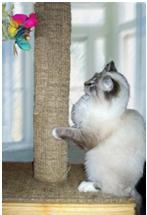
ATTENTION LANDLORDS!
Prevent Urine Property Damage!
Allowing pets as renters is a great money maker for landlords! Attracting long term, quality renters with a demonstrated ability to care for valuables, & charging a higher security deposit, or extra pet fees, are easy ways to help the units stay occupied & the business to prosper!
When landlords do allow cats as tenants though, many require that they be “declawed” thinking this will prevent damage to their property. What they may not know is that declawing is a serious, painful surgery whose effects can actually cause damage to the property.
"DECLAWING” involves 10 separate, painful amputations of a cat’s knucklebone, tendons, ligaments, & nerves. It is actually “de-toeing” or “de-knuckling” a cat which is illegal in many countries because it permanently disfigures a healthy paw. This is a medically unnecessary surgery that carries risks & physical, psychological, & behavioral consequences.
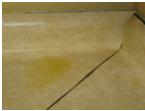
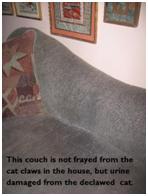
Studies prove that declawed cats use their teeth more (they become "mouthy" since their main means of claw defense is now gone) and their litterbox less due to a variety of reasons including chronic or intermittent paw pain, pain association with the litterbox, and arthritis. It may feel much better to a declawed cat to urinate on a smooth surface than to dig their declawed paws into rough litter. The floors, carpet, drywall, baseboards, and woodwork may be the new place where the cat urinates, creating lingering urine smell, penetrating urine soaking, and extensive and expensive property damage.
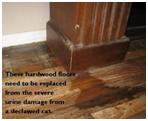
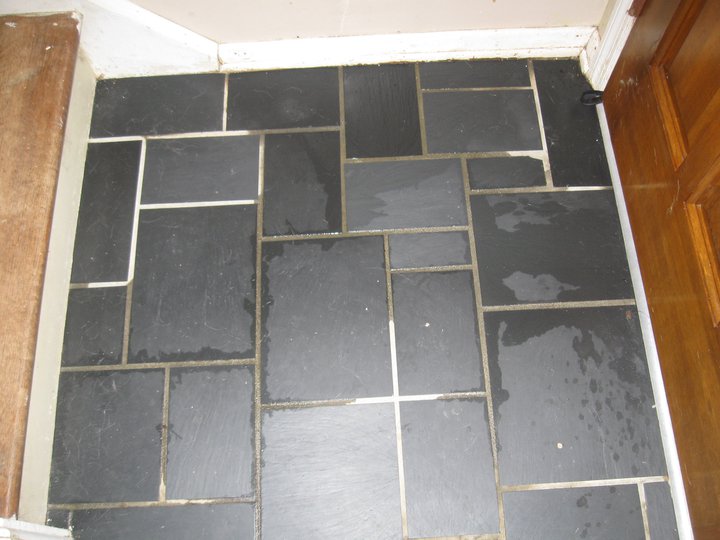
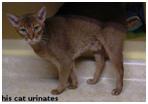
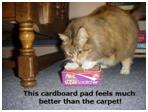
Instead of requiring cat declawing, landlords can ask renters for a resume or bio of their cats depicting how they address cat scratching. Require that each cat tenant have tall sisal scratching posts and several cardboard scratch pads before moving in. The vast majority of cats can easily be redirected to do their healthy scratching on cardboard scratch pads and sisal posts, and there is also Soft Paws (http://www.softpaws.com) & Sticky Paws (http://www.stickypaws.com) for more stubborn, but still trainable, cats.
Massachusetts Animal Coalition Tips For Landlords DO and DON'Ts for Landlords
“DON’T: Require declawing of cats.
This is a cruel and disfiguring procedure which often results in more severe behavior problems. Scratching is better solved with behavior modification and management techniques on the part of the cat owner.”
http://www.massanimalcoalition.org/landlords.html#_DO’S_AND_DON’Ts
HUMANE ALTERNATIVES:
NAIL TRIMMING: regular nail trims keep claws blunt & harmless and unable to snag or tear furniture, carpet or woodwork.
SCRATCH POSTS: sturdy, tall, coarse sisal scratch posts really work!
http://www.purrfectpost.com
CARDBOARD SCRATCH PADS: corrugated cardboard naturally attracts cats for scratching and can be purchased at most grocery stores these days.
STICKYPAWS: or double-sided tape can be put over woodwork to prevent damage.
http://www.stickypaws.com
SOFT PAWS: vinyl nail caps that are glued over cat claws.
http://www.softpaws.com
(*If you would like this information in a Word Document, check HERE!)
I have been a landlord for over 30 years and have rented to many people with cats during this time. I have never had to withhold any security deposits from cat damage, nor do I ask for an additional deposit when cats are part of the family that is renting from us….
I think that other landlords might be gratified to learn of an extremely high correlation (that I have found) for when a prospective tenant says that they would never do something like that to a cat (declaw)...will turn out to be a great tenant who will not want to disturb other tenants and care about taking care of the landlord's property…
I do encourage companion people to put a lot of scratching posts all over when the apartment has wall to wall carpeting, and have never had a problem with cats ruining any carpets.”
T. Line Development

Prevent unwanted animals in overcrowded shelters.
Their only crime is being born.
Their punishment is execution.
Please spay and neuter your pets.